AFTER-SALES SERVICE FOR CENTRIFUGAL PUMPS AND PUMPING SYSTEMS
Apollo Gößnitz offers a comprehensive after-sales service for centrifugal pumps and pumping systems. We focus on technical availability, rapid support and long-term service throughout the system's entire lifecycle.
Our services include support for commissioning, operation, maintenance, supply of spare parts, training and technical documentation. We ensure the reliability of your pump systems in demanding applications across the chemical industry, power generation, water management, renewable energy and general process engineering.
As a pump manufacturer with in-house expertise, we have an in-depth understanding of our systems' design and operational requirements.
Our service staff have particularly thorough knowledge of the pumps and systems because they are also involved in the manufacturing process. This enables us to provide targeted solutions for malfunctions, wear, modernisation and spare parts requirements. We focus on predictable availability, quick response times, and long-term collaboration with our customers.


Global service support for Apollo pumps
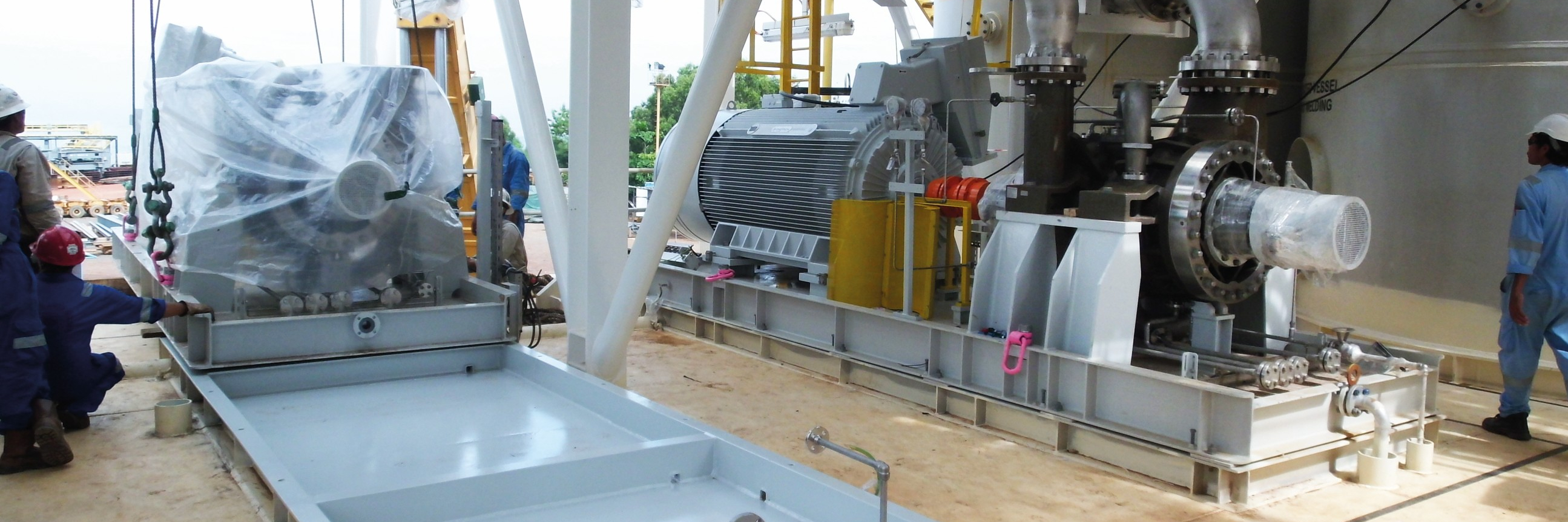
Apollo Gößnitz provides a global after-sales service. Our service teams are deployed internationally and support operators directly on-site, regardless of the system’s location. If disassembly or transportation of the pumps is not possible or cost-effective, we carry out maintenance, repairs and commissioning directly on site. Our specialists particularly support projects worldwide during the installation and commissioning of pump skids, ensuring a safe and efficient system start-up.


Service throughout the entire lifecycle


Our services support your pumps throughout all phases of operation:
Commissioning and system integration | Ongoing operation and maintenance
Repairs and spare parts supply | Modernization and performance optimization
FAQ: Frequently Asked Questions About After-Sales Service
Maintenance intervals for process pumps depend on specific operating conditions, particularly the pumped medium, temperature and pressure, and the load during continuous operation. It is therefore not possible to specify a standard interval. In practice, maintenance is usually carried out during scheduled plant shutdowns. Additionally, it is recommended that relevant operating parameters, such as vibration behaviour, bearing temperatures and seal condition, are continuously monitored in order to detect wear early on and avoid unplanned downtime.
Pump failures in industrial process plants are usually caused by a combination of operational and plant-related factors. The most common causes include mechanical wear on bearings and seals, cavitation due to inadequate NPSH conditions and misalignment of drive train components. Other contributing factors include operating outside the best efficiency point (BEP), thermal overload and the presence of abrasive or corrosive media.
Retrofitting involves modernising existing centrifugal pumps to adapt them to changed operating conditions or increase efficiency during ongoing plant operation. The aim is to restore or enhance hydraulic and mechanical performance. Typical measures include hydraulically optimising impellers, modifying housing components, using improved materials and modernising sealing systems. Additionally, adjustments can be made to ensure compliance with current standards.
Repair is a particularly cost-effective and technically sound solution when the base housing and load-bearing components of the centrifugal pump remain structurally intact. For high-quality industrial pumps, repair is often an efficient alternative to replacing the pump. As part of a technical evaluation, wear conditions are analysed, component tolerances are checked and the remaining service life is assessed.
The response time for a service call depends on the urgency of the malfunction and how critical the system is to operations. It also depends on the availability of replacement parts and personnel. In critical safety or production cases, planning is prioritised. Global logistics affect on-site availability. In urgent cases, an initial technical diagnosis is performed to find a solution as quickly as possible. Ideally, particularly critical malfunctions should be repaired or resolved within 24 hours.
As part of professional pump maintenance, all relevant mechanical and hydraulic components are systematically inspected. This includes vibration analysis, temperature measurement, leak testing and assessment of bearing conditions and shaft alignment, among other things. Visual and metrological inspections are also performed on impellers, sealing systems and housing components. These results are then used to evaluate the pump's condition and provide a well-informed prognosis regarding its continued operational capability.
As Apollo generally manufactures products on a made-to-order basis in accordance with specific customer requirements, it does not maintain a standardised inventory of spare parts. However, to ensure high system availability, it is possible to order a customised package of spare parts (particularly wear parts) when placing a new order for a pump. Spare parts can also be manufactured based on reverse engineering for older systems or discontinued model series.
At Apollo, the cost of a service request is determined on a case-by-case basis, depending on the technical requirements of the pump system in question. Key factors include the scope of any necessary maintenance or repairs, the condition of the centrifugal pump, the materials used and operational parameters such as fluid type, temperature and operating pressure. Following a technical analysis of the system, a structured cost estimate is prepared.
Apollo Gößnitz offers hands-on training courses for operators, maintenance personnel and technical specialists in the field of industrial centrifugal pump systems. The training focuses on the safe and efficient operation of process pumps in accordance with API 610, DIN, and ISO standards. Course content includes pump design, hydraulics, operational behaviour, failure mechanisms, fault diagnosis and maintenance. Training courses are available at Gößnitz's facilities or on-site worldwide, equipping plant personnel with the necessary technical skills.